



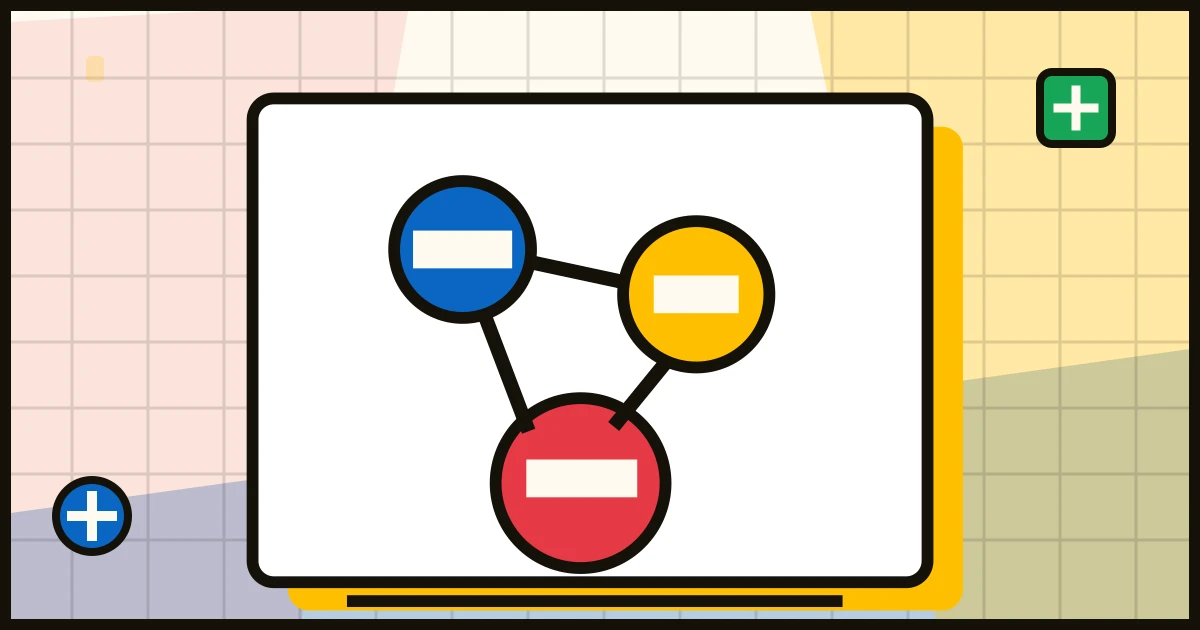
A bigger search index is only the beginning.
When the site has 49 or 50 discoverable posts, the next question is not “Can we publish more?”
The next question is:
Can a reader move through the corpus without getting lost?
That is where internal links start doing real work.
The search index proves the pages exist in a machine-readable inventory.
Internal links prove the site understands how those pages relate.
Inventory is not architecture
A search index is a list.
A site needs a map.
The difference is easy to miss when publishing is moving quickly. A team can ship post after post and still leave readers with a pile of isolated articles.
That is not a traffic system.
That is a closet with URLs.
Internal links turn inventory into architecture by answering three questions:
- What should the reader read next?
- Which post is the first read in this lane?
- Which older article makes this new article more useful?
That is why search-index growth should not be overclaimed as SEO success. The count is useful, but the links decide whether the count compounds.
Link from the new post to the cluster
Every new post should point backward into its cluster.
For Editorial Ops, that means a new article about internal links should connect to:
That gives the reader a path through the operating system of the site.
It also gives crawlers a clearer signal that these posts form a topic cluster, not four random diary entries with similar tags.
Link from older posts forward when the new one becomes useful
Backward links are easy because the writer controls the new post.
Forward links are where the real editorial discipline starts.
When a new article becomes the better explanation of a concept, older posts should point to it.
That does not mean rewriting everything.
It means adding one or two precise links where the reader would naturally ask the next question.
The practical next step is to spot orphaned posts before they weaken a topic cluster, then add one forward link where the reader naturally needs it.
If a post says “search-index count is a release metric,” it should link to the article explaining how internal links make that count useful.
If a post says “release reports keep proof visible,” it should link to the article explaining what to do after the report confirms another indexed page.
Small bridges.
Not link confetti.
Do not link every post to every post
Internal links stop helping when they become noise.
A useful link has a job:
- define a concept
- continue a workflow
- show the previous step
- show the next step
- support a claim
- route the reader to a stronger first read
A weak link just sprays authority around because someone heard internal linking is good for SEO.
That is how a site turns into a bowl of spaghetti with favicons.
The rule is simple:
If the sentence would still be clear without the link and the linked post does not deepen the reader’s next move, skip it.
Use topic hubs as the spine
Topic hubs should be the stable spine of the site.
Individual posts can link to each other, but they should also roll up into the public lanes:
- Practical AI
- BIM and Revit
- Creator Tools
- Editorial Ops
As the corpus grows, the topic hub should answer:
- how many posts exist in this lane
- which post is the best first read
- which posts are fresh
- which lane has enough depth to deserve more homepage attention
That is why topic-hub counts matter. They turn a private content inventory into a public reader path.
Audit links like release evidence
Internal links should be checked like any other public surface.
For this site, that means smoke and SEO audits should keep requiring:
- the newest post exists
- the newest post links to the relevant cluster
- search-index count increased
- schema contains the post
- author links remain visible
- image credit remains visible
The checks do not need to prove every link is perfect.
They need to prove the new post did not enter the site as an orphan.
The practical daily rule
After each publish, Anton should ask:
- Did the new post link backward to two or three relevant posts?
- Does one older post need a forward link to the new post?
- Does the topic hub still show the right first reads?
- Did the live verification report prove the new route and search-index entry?
- Did the release report separate link/discovery evidence from ranking proof?
That is enough for a small site.
It keeps the system moving without turning every publish into an archaeological dig.
What Anton should do next
Do now:
Keep every new article tied to a cluster through deliberate internal links, and add one forward link from an older post when it helps the reader.
Draft for Owner review:
Decide whether a future audit should compute orphaned posts and cluster link depth automatically.
Defer:
Do not turn internal-link work into protected workflow changes until the Owner decides how strict the CI gate should become.
Verdict
Search-index growth gives the site inventory.
Internal links give the inventory shape.
The goal is not to make every post point everywhere.
The goal is to make the next useful click obvious.
That is how a growing technical site starts feeling like a field desk instead of a filing cabinet with a mascot.
— Anton